
Uganda National Tours
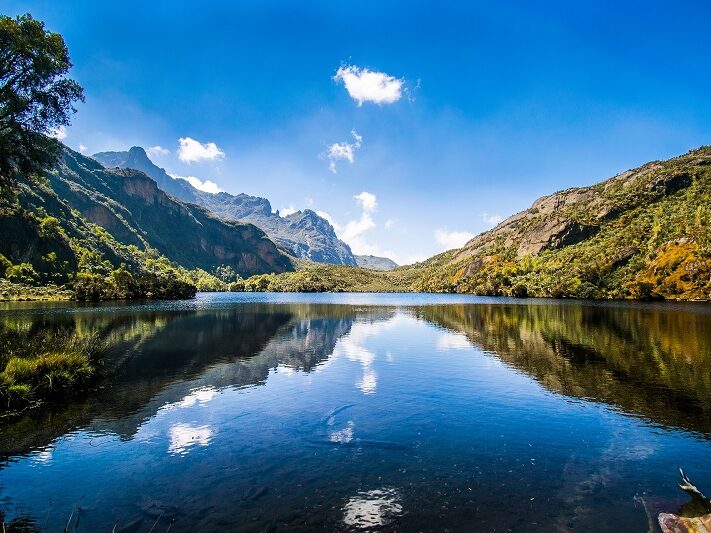
Mount Rwenzori National Park is where adventure meets altitude – a place where tropical Africa rises into snow and cloud. Tucked in western Uganda along the border with the Democratic Republic of Congo, this UNESCO World Heritage Site protects Africa’s highest mountain range, following Mount Kenya in Kenya and then Mount Kilimanjaro in Tanzania. Mount Rwenzori National Park is a destination that feels remote yet rewarding, offering trekkers a rare chance to explore from lush rainforest to glacier within a few days.
Covering 996 square kilometers, the park was established in 1991 and later designated a UNESCO World Heritage Site in 1994 to protect the Rwenzori Mountains, also known as the “Mountains of the Moon.” The park’s outstanding landscape rises sharply from the fertile plains of Kasese and Bundibugyo to the icy peaks of Mount Stanley, whose Margherita Peak (5,109 m) is Africa’s third-highest point. The ranges are not volcanic but uplifted by ancient tectonic forces, forming dramatic ridges, deep valleys, and high-altitude lakes.
The park’s vertical elevation slope creates a remarkable variety of ecosystems, from Afro-montane forests at the base to heather, bamboo, and giant lobelia zones above 4,000 meters. Moreover, the park’s glaciers feed several rivers that join the Nile, making it a vital watershed for the region.
Packing List for a Hike on Mount Rwenzori
Packing right for your Mount Rwenzori hike can make or break your trek. The weather in Mount Rwenzori National Park can shift from tropical heat to alpine snow in a day, so pack for all conditions. Essentials include:
Summit climbers should also carry or rent crampons, ice axes, and ropes. Always hire experienced guides and porters; they are invaluable for safety and navigation.
Attractions in Mount Rwenzori National Park
• The Rwenzori Mountain Ranges
The Rwenzori Mountain Ranges are undoubtedly the park’s major tourist attraction, bringing thousands of hikers every year from across the globe. These ranges stretch roughly 120 kilometers long and 65 kilometers wide, consisting of six main massifs separated by deep gorges: Mount Stanley (5,109m), Mount Speke (4,890m), Mount Baker (4,843m), Mount Emin (4,798m), Mount Gessi (4,715m), and Mount Luigi di Savoia (4,627m). Mount Stanley is the highest, and its Margherita Peak, which is the third-highest point in Africa, is permanently capped in ice. Below it lie glacial valleys filled with lakes Bujuku, Kitandara, and Mahoma – spectacular mirror-still waters reflecting the icy summits above.
Each altitude on the Rwenzori Mountain Ranges tells a different story. The lower slopes are cloaked in verdant forest filled with a variety of primates and birds, while mid-elevations reveal bamboo thickets and heather trees. Higher up the ranges, the Afro-alpine moorlands appear almost extraterrestrial, dotted with giant lobelias and towering groundsels draped in the cold. This swift transition from tropical forest to icy peak is what makes the Rwenzori Mountains so unique and ecologically rich.
For trekkers, the ranges offer both adventure and revelation – an ascent through Africa’s rarest ecological zones within a single mountain chain.
• Wildlife
Wildlife in Mount Rwenzori National Park is subtle but fascinating, with over 70 mammal species recorded, including endemic species like the Rwenzori hyrax and the Rwenzori leopard. The park is also home to forest elephants, giant forest hogs, buffaloes, Rwenzori red duikers, and bushbucks, which can be spotted roaming the park’s lower slopes. Primate lovers can expect to spot species such as the while blue monkeys, black-and-white colobus monkeys, L’Hoest’s monkeys, Red-tailed monkeys, and Eastern chimpanzees – though they are not habituated.
• Birdlife
Mount Rwenzori National Park is a birder’s dream wrapped in mountain mist. The park is home to over 217 recorded bird species, including 19 Albertine Rift endemics, making it an Important Birding Area (IBA) in Uganda. Bird communities in the park change dramatically with elevation: the greatest diversity, including many forest endemics, is found in the montane forest belt (roughly between 1,800 to 2,500+ meters). Among these are the Rwenzori turaco, Barred long-tailed cuckoo, Handsome Francolin, and Blue-headed sunbird.
Higher up into the heath and afro-alpine zones, fewer species appear, but those that remain are often highly adapted specialists. Some of these include the Rwenzori Batis, Scarlet-tufted Malachite Sunbird, Slender-billed starling, and the Strange Weaver. Birding in Mount Rwenzori National Park rewards patience, as most sightings happen along the forest edge and riverbanks at dawn or late afternoon, when birds are most active.
Activities to Do in Mount Rwenzori National Park
Mount Rwenzori Hiking
Mountain hiking is the main activity in Mount Rwenzori National Park and arguably one of the most challenging and rewarding treks in Africa. There are three main hiking routes: the Central Circuit Trail and the Kilembe Trail, and the Bukurungu Wilderness Camping Trail.
This trail is the oldest and most ancient trail. It begins at Nyakalengija (near Kasese) and takes 6 to 8 days to complete. The circuit winds through valleys, ridges, and glacial basins, reaching high camps near Mount Stanley’s snowfields. The trail is managed by the local community surrounding the park, and it offers the quickest and most accessible route to Margherita Peak, making it a favorite among climbers. Though it remains relatively manageable, trekkers should brace for the challenging stretch beyond John Maate Camp, where the trail cuts through the soggy expanse of the Lower and Upper Bigo Bogs – a true test of endurance amid breathtaking alpine scenery
The Kilembe Trail, or Southern Circuit, is managed by Rwenzori Trekking Services (RTS) and was reopened for tourism after new mountain huts were built within the park. First explored by Professor Scott Elliott in 1895, it is the longest route to Margherita Peak, allowing better acclimatization and unmatched views of glaciers, lakes, and alpine flora. Known for its excellent guides, quality gear, and safety, the trail takes about 7 to 8 days to the summit and rivals the Bukurungu Camping Trail in wilderness charm.
Developed by Bujuku Eco Tours under the Rwenzori Mountains National Park, the Bukurungu Trail was established after the Central Circuit and Kilembe routes. The trail isideal for travelers who love raw wilderness, leading through four breathtaking lakes: Mughuli, Bukurungu, Bujuku, and Irene, and past cascading rivers, waterfalls, and lush alpine vegetation. The trek takes about 8 days to reach Margherita Peak and, unlike other routes, offers a pure camping experience with safe and well-organized campsites instead of mountain huts.
Climbers aiming for Margherita Peak (5,109 m) require basic mountaineering skills for glacier travel and must carry essential gear, including ropes, harnesses, crampons, and ice axes, to navigate through glaciers.
Nature Walks
For travelers not keen on multi-day Rwenzori hikes, guided nature walks in the park offer a shorter but equally immersive taste of the Mount Rwenzori’s landscapes. Led by expert guides, the walks are launched from the park offices at Nyakalengija or Kilembe, exploringlower forest trails, rivers, and waterfalls such as the Buraro and Mubuku.
Popular trails include the Mahoma Nature Trail – a popular 2- to 3-day trek that loops around the lower slopes, visiting Lake Mahoma and offering superb views of the main peaks. Along these walks, visitors can encounter primates, colorful birds, and local plant species while learning about forest ecology from local guides.
Birdwatching
Birdwatching tours in Mount Rwenzori National Park are conducted early in the morning when birds are most active. Prime birding sites include the Kilembe Trail, the Mahoma Trail, and the Nyakalengija forest zone, where Albertine Rift endemics like the Rwenzori turaco, strange weaver, and Archer’s robin-chat can be found. Birding tours are led by trained local guides who understand the forest acoustics and bird behaviors. Whether you’re an experienced birder or a casual observer, the Mount Rwenzori’s highland species are worth every birder’s time.
Cultural Tours
Mount Rwenzori National Park is surrounded by several local communities, but the most popular are the Bakonjo people, who live on the outskirts of the park. A cultural visit to the Bakonjo community offers a rich cultural experience that deepens every visit. The Ruboni Community Tourism Initiative near Nyakalengija is one of the most established cultural siteswhere visitors can meet local Bakonjo farmers, taste traditional food, learn to weave baskets, or enjoy performances of Bakonjo music and dance.
Another highlight is the village walk, where guides share insights into how the Bakonjo live in harmony with the mountains, their knowledge of traditional herbal medicine, and how community tourism supports both livelihoods and conservation.
Best Time to Visit Mount Rwenzori National Park?
Mount Rwenzori National Park can be visited at any time of the year, but the best time to visit is during the dry seasons, from June to mid-September and December to February. These months bring relatively stable weather, firmer trails, and clearer mountain views, ideal for mountain climbing, hikes, nature walks, and photography.
However, rain is still possible even in dry months, especially at high altitudes, but it’s less frequent and intense, unlike during the wet seasons (March to May and September to November) when trails are slippery and crossings difficult.
If your goal is summiting the Margherita Peak or embarking on a multi-day trek, it is better to aim for the dry months. For photography, birdwatching, or shorter nature walks, the wet seasons can be rewarding for their misty atmosphere and lush vegetation.
How to Get to Mount Rwenzori National Park
Mount Rwenzori National Park is located in western Uganda, near the towns of Kasese and Fort Portal. From Kampala/Entebbe, the journey is between 310 – 400 kilometers, which is about 6 to 7 hours by road, depending on the route. The main routes to Mount Rwenzori National Park are;
• Kampala–Mityana–Mubende–Fort Portal–Kasese, or
• Kampala–Masaka–Mbarara–Kasese.
Alternatively, one may charter or take a scheduled flight from Entebbe International Airport (EBB) or Kajjansi Airfield and land at Kasese Airstrip, just 25 minutes from the park headquarters at Nyakalengija or Kilembe. The flight takes about one hour.
From Kasese, visitors using public transportation can hire local transfers to the park gates. Both trailheads have Uganda Wildlife Authority offices for registration, guide allocation, and permit processing.
Uganda Safari Packages 2026/2027
Uganda safaris are among the most rewarding travel experiences in Africa, offering a perfect blend of adventure, wildlife, culture, and breathtaking scenery. Known as the “Pearl of Africa,” Uganda provides diverse safari opportunities that cater to every type of traveller — from adventurous explorers to relaxed holidaymakers, young and old, solo visitors, couples, and group tourists. Whether you are interested in unforgettable gorilla trekking, classic wildlife game drives, scenic boat cruises, birdwatching, or immersive cultural encounters, Uganda has something special for everyone. Explore some of our top Uganda safari packages below and discover journeys carefully designed to showcase the country’s most remarkable destinations and experiences
Whitan Safaris, your gateway to unforgettable wildlife and nature experiences across Uganda, Kenya, and Rwanda. We are a safari travel company dedicated to designing journeys that connect travellers with Africa’s wild landscapes, iconic wildlife, and vibrant cultures.
Safaris and Tours
Contact Us
Copyright © 2026 Whitan Safaris - Brand by Robylinks Solutions