
Kenya National Tours
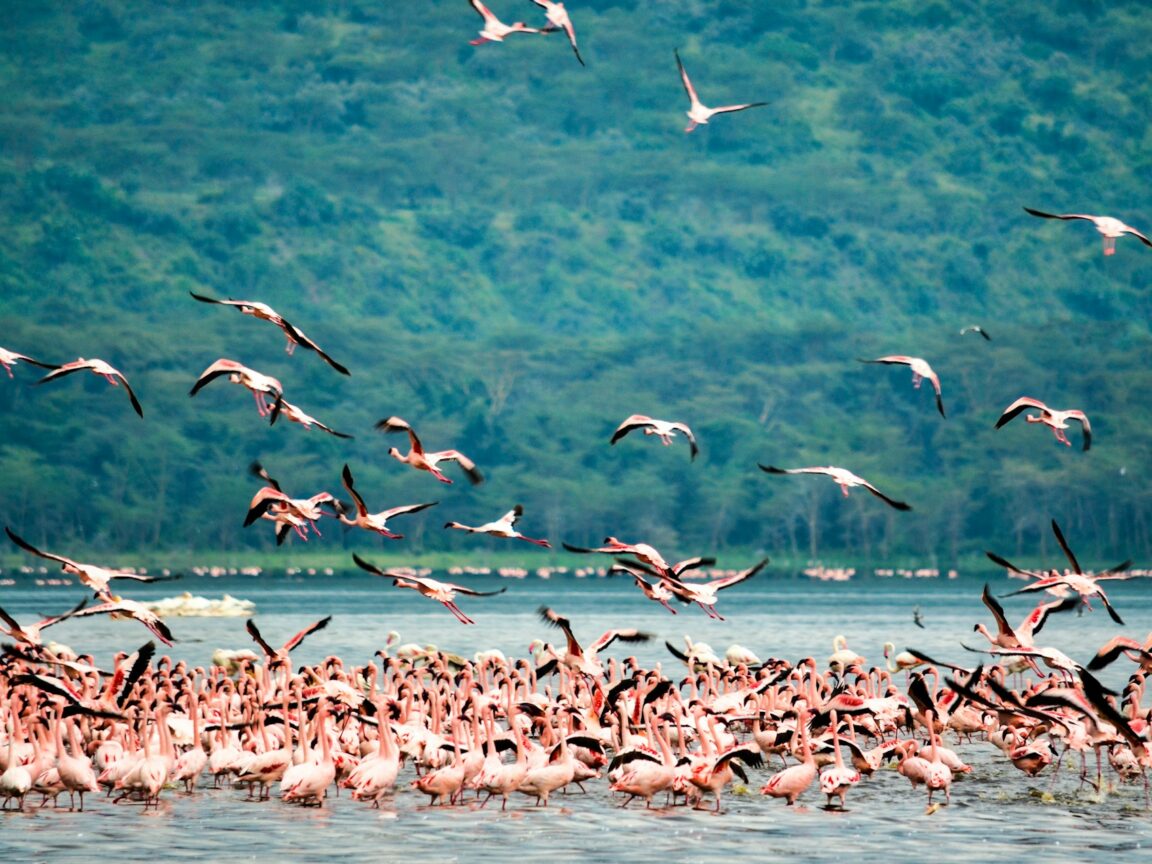
Lake Nakuru National Park is often described as Kenya’s most convenient safari destination – a place where travellers can experience classic wildlife viewing, dramatic Rift Valley scenery, and rich birdlife within a relatively small area. The park centers on Lake Nakuru, a shallow alkaline lake that has long been one of East Africa’s most important RAMSAR sites, famous for once attracting over 1.5 million flamingos, and more than 400 other bird species.
However, the park’s uniqueness lies in how much diversity the park holds in such a compact space. Within a single game drive, visitors can move from acacia woodlands to open grasslands, rocky escarpments, lakeshore habitats, and dense euphorbia forests, all while encountering healthy populations of buffalo, lions, leopards, Rothschild’s giraffes, and one of Kenya’s most significant rhino sanctuaries.
And yet, this landscape is far more dynamic and more vulnerable than it first appears. Over the past decade, Lake Nakuru has undergone significant ecological changes driven by pressures outside the park’s boundaries. From the rapid urban growth in Nakuru city to the catchment degradation in the Mau Forest, increased agricultural runoff and industrial waste have all affected the lake’s water quality. Furthermore, rising water levels, linked to wider regional hydrological changes, have submerged roads, picnic sites, and large stretches of the shoreline, altering salinity and reducing the algae blooms that once supported the park’s world-famous flamingo concentrations.
Nonetheless, these challenges have not diminished the value of exploring the park’s rich biodiversity. If anything, they highlight the importance of understanding the park as a living, shifting ecosystem. Moreover, platforms like LakeNakuru.org have been created in response to these environmental pressures, offering ongoing updates, conservation insights, and educational resources that help travellers understand what is happening to the lake and why it matters.
As a result, Lake Nakuru remains an ideal safari destination to visit, offering excellent wildlife viewing, remarkable birdlife, and scenic viewpoints that provide sweeping views of the Great Rift Valley.
Introduction to Lake Nakuru National Park
Covering 188 square kilometers, Lake Nakuru National Park is compact but remarkably diverse, attracting travellers looking for a Kenya safari destination that combines convenience with high wildlife density. The park lies about 170 kilometers northwest of Nairobi, within the Great Rift Valley, and sits at an elevation of 1,750 to 1,900 metres. The altitude brings cooler temperatures and clear views, especially in the early morning when the Rift Valley landscape is at its most dramatic.
Lake Nakuru began its conservation journey in 1961, when the southern shores of the lake were first protected as Kenya’s first RAMSAR site to safeguard its world-famous flamingo populations. Later, the area’s ecological importance quickly became clear, and by 1968, it was upgraded to full national park status under the Kenya Wildlife Service (KWS), marking its rise as one of the most accessible and biologically rich parks in Kenya.
Geographically, the park is mostly dominated by Lake Nakuru – a shallow, alkaline, closed-basin lake fed by several rivers and natural springs, but with no outlet, making it highly sensitive to shifts in rainfall and water chemistry. These fluctuations influence flamingo numbers and water levels, shaping the entire Lake Nakuru ecosystem. The lake’s productivity is further driven by cyanobacteria, the algae that once supported the legendary pink clouds of flamingos and a wide array of birdlife.
Despite its size, the park contains a varied mix of habitats, including acacia woodlands, especially the iconic yellow-barked fever trees, Euphorbia forests, grasslands, scrub savannah, wetlands, riverine belts, and the distinctive alkaline shoreline of Lake Nakuru. This diversity supports rich wildlife viewing in a very manageable space, making the park one of Kenya’s most traveller-friendly safari destinations.
Best Attractions in Lake Nakuru National Park
1. Flamingos
Lake Nakuru is world-renowned for its enthralling pink flamingo populations, primarily Lesser Flamingos and Greater Flamingos, which feed on the lake’s spirulina-rich algae. At their peak, these birds can cover the shoreline in a vibrant pink blanket – a breathtaking sight that draws photographers and wildlife enthusiasts alike. While numbers now fluctuate due to changes in water levels and salinity, spotting even a few flamingos offers a glimpse into a delicate, ever-changing ecosystem that makes Lake Nakuru a must-visit birding destination.
2. Birdlife Beyond Flamingos
Lake Nakuru is more than just its pink flocks. The park supports over 400 bird species, including African Fish Eagles swooping over the lake, large pelican colonies feeding alongside cormorants, and rare waders such as black-winged stilts and spur-winged lapwings. Seasonal migrants like yellow-billed storks and common terns add bursts of color and movement in the park, while the papyrus swamps and woodland edges host secretive species like the African Marsh Harrier.
The park’s diversity of wetlands, lakeshore, and woodland habitats makes Nakuru a birding hotspot unlike any other in Kenya, offering experiences that cannot be replicated at typical savannah parks.
3. Wildlife
Despite its small size, Lake Nakuru hosts a surprising variety of wildlife, including its fenced rhino sanctuary, which protects both black and white rhinos, making the park one of the country’s most reliable places to spot these endangered giants. Beyond rhinos, the park is home to Rothschild’s giraffes, buffalo herds, waterbucks, and lions, all moving across a mix of grasslands, woodlands, and wetland edges.
Moreover, the proximity of diverse species makes the park special: visitors can easily spot lions stalking prey near flamingo-filled shores or rhinos grazing alongside giraffes in a single game drive, creating a safari experience that feels rich, varied, and highly photogenic, even in a park of modest size.
4. Lake Nakuru
Located at the heart of the park, this shallow alkaline is the ultimate dynamic ecosystem. Its dense algae blooms provide food for flamingos, while fish support fish eagles, pelicans, and cormorants, creating constant wildlife activity along the shoreline. However, the lake’s water level and salinity fluctuate seasonally due to human impacts, which reshape beaches and mudflats, affecting where birds gather.
Thus, every visit to the lake ought to be different: one year, you may see vast pink flamingo flocks covering the lake’s edge, and another, smaller groups may concentrate in sheltered bays. As a result, visitors find endless opportunities to enjoy the interplay between wildlife, water, and the Rift Valley scenery, making Lake Nakuru the epicenter for wildlife viewing in the park.
5. Baboon Cliff
The viewpoint offers sweeping views of Lake Nakuru and the Rift Valley escarpment. Named after the troops of baboons that inhabit the area, the spot is perfect for photography, picnics, or simply taking in the landscape. Sunrise and sunset visits here reward travellers with impressive shots and a sense of the park’s scale.
6. Makalia Falls
Tucked in the park’s southern edge, Makalia Falls is a quiet gem along the seasonal Makalia River, which is fed by streams from the Mau Forest. The falls cascade about 10 metres into a small plunge pool, which attracts a variety of birds. Here, visitors can also enjoy nature walks and picnics, offering a peaceful contrast to the busy lakeshore and a chance to experience the park’s more intimate corners.
7. Out of Africa Lookout & Lion Hill
The Out of Africa Lookout and Lion Hill provide some of the park’s most spectacular views. From these elevated points, visitors can see Lake Nakuru, the Rift Valley plains, and surrounding escarpments in one sweeping panorama. The vantage makes it easy to spot lions, giraffes, buffaloes, and other wildlife moving across the park, while also offering excellent opportunities for photography and taking in the scenery.
8. Euphorbia Forest
Lake Nakuru’s escarpment ridges host one of Africa’s largest pure stands of Euphorbia candelabrum, a surreal forest of architectural succulent trees. This unique habitat adds botanical richness and complements the open savannahs and wetlands, creating a visually and ecologically diverse landscape.
Things to do in Lake Nakuru National Park
Game Drives
Lake Nakuru is ideal for game drives, and its well-maintained circuits let you explore different zones of the park. The Rhino Circuit offers sights of both black and white rhinos, while the Lake Shore Drive offers awesome views of flamingo-lined shores and grazing buffalo, among other wildlife. Guided drives in Lake Nakuru run early in the morning and late afternoon, maximizing your chances to spot predators like lions, leopards, rhinos, giraffes, and waterbucks.
Birdwatching
With more than 400 bird species, Lake Nakuru is a top Kenya safari birding destination. Led by expert birding guides, you can explore the lake shores to spot flamingos, pelicans, herons, ibises, African Fish Eagles, and migratory species depending on the season. Key birdwatching spots in the park include the southern lake shore, Makalia River delta, and cliff edges like Baboon Cliff.
Guided Nature Walks & Makalia Falls
Take a ranger-led walk to Makalia Falls, a roughly 2 km round-trip trail that takes about 45 minutes. Along the way, you will walk through the park’s riverine vegetation, see wildlife like baboons and bushbucks, and enjoy birdwatching. The falls also offer a picnic area to sit and relax.
Scenic Viewpoints and Photography
Visit Baboon Cliff, Out of Africa Lookout, and Lion Hill to capture sweeping Rift Valley scenery and wildlife below. These elevated spots are perfect for photography, picnics, and taking in panoramic views of the Rift Valley escarpment, at sunrise or sunset.
Picnics and Camping
Lake Nakuru National Park also offers designated picnic sites near Baboon Cliff or close to Makalia Falls, where visitors can enjoy great park views and serenity.
For overnight stays, there are public campsites like the Makalia Campsite, plus special sites near the rhino sanctuary and Naishi, offering nights under the African lit sky.
Conservation and Rhino Sanctuary Experience
One of Lake Nakuru’s most defining experiences is visiting the rhino sanctuary, home to both black and white rhinos. Guided drives here provide a close-up look at the efforts of conservation at work, from anti-poaching and habitat protection to rhino tourism.
Best Time to Visit Lake Nakuru National Park
Lake Nakuru National Park can be visited year-round, but the dry seasons from June to October and December to February are ideal for wildlife viewing and photography. During these months, water levels are lower, concentrating animals and birds, especially flamingos, along the lake shore. This makes sightings easier and more predictable.
However, the rainy seasons from March to May and November are ideal for birdwatchers and nature enthusiasts, as migratory birds arrive and the park’s wetlands flourish, creating vibrant wildlife and birding opportunities.
How to Get to Lake Nakuru National Park?
Lake Nakuru National Park is one of the most accessible safari destinations in Kenya, located 170 kilometers northwest of Nairobi, and the drive usually takes between 3 to 4 hours 5, depending on traffic around Naivasha and Nakuru. The route follows the fully-paved A104 Nairobi–Nakuru Highway, passing through Naivasha, Gilgil, and the floor of the Great Rift Valley. The park can be accessed through its Main Gate, Lanet Gate, and the Nderit Gate, with Lanet Gate being especially convenient for travellers arriving directly from Nairobi.
The park is also about a 2-hour drive from Lake Naivasha, a 40-minute drive from Lake Elementaita, a 3-hour drive from Eldoret, and about a 5- to 6-hour drive from the Masai Mara National Reserve, making it an easy addition to most Rift Valley and western Kenya safari circuits.
Budget travellers can board matatus or long-distance buses from Nairobi to Lake Nakuru, which typically takes 2.5 to 3 hours. From Nakuru town, the park is only a short distance away, and you can complete the final transfer using a taxi or boda-boda. However, public transport does not enter the national park itself, so you will need a safari vehicle or pre-arranged transport for game drives.
Lake Nakuru can also be reached via charter flights to Lanet Airstrip in Nakuru or Naishi Airstrip inside the park. There are also private charter flights from Wilson Airport in Nairobi that take about 30 – 45 minutes. After landing, short road transfers take you to lodges or park gates.
Kenya Safari Packages 2026/2027
Planning a Kenya safari in 2026 or 2027 offers travellers the chance to explore some of Africa’s most iconic wildlife destinations, from the world-famous Masai Mara to the scenic Amboseli plains and the beautiful Great Rift Valley lakes. Kenya safari packages range from short 3-day wildlife trips to extended luxury journeys combining multiple national parks and even relaxing beach holidays along the India
Whitan Safaris, your gateway to unforgettable wildlife and nature experiences across Uganda, Kenya, and Rwanda. We are a safari travel company dedicated to designing journeys that connect travellers with Africa’s wild landscapes, iconic wildlife, and vibrant cultures.
Safaris and Tours
Contact Us
Copyright © 2026 Whitan Safaris - Brand by Robylinks Solutions