
Uganda National Tours
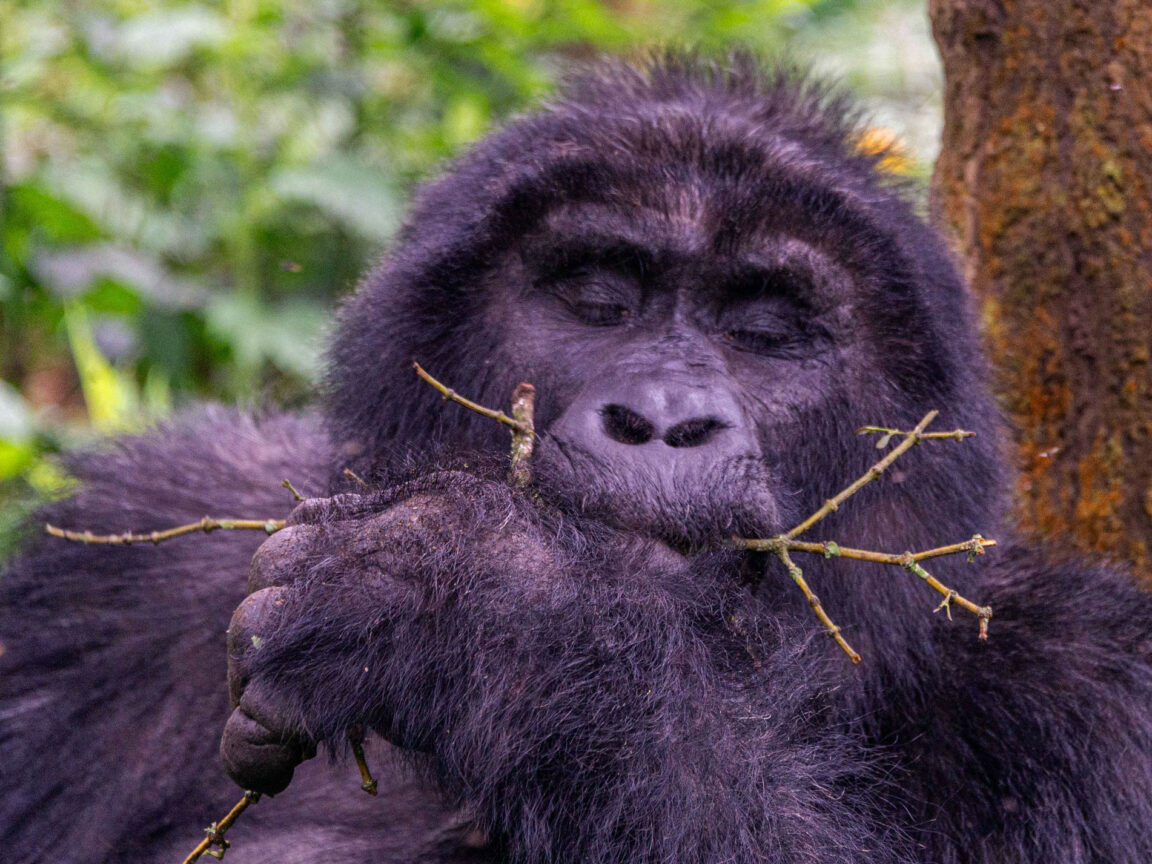
Bwindi Impenetrable Forest National Park is the crown jewel of Uganda’s top safari destinations, boasting a natural habitat to one of the world’s most sought-after mammals – the mountain gorilla. The park lies in the rugged highlands of southwestern Uganda, along the edge of the Albertine Rift near the borders with the DR. Congo (DRC) and Rwanda. Bwindi covers only 321 square kilometers of mixed montane and lowland forest featuring steep ridges, deep valleys, and a mosaic of habitats, accessible only on foot. Established as a national park in 1991, the park is a UNESCO World Heritage Site prized for its extraordinarily high biodiversity and, most famously, its remarkable population of mountain gorillas.
Featuring steep terrain and thick vegetation, Bwindi earned its name “impenetrable,” not as a boast, but as truth. From its lowest valleys to ridges over 2,600 meters, the forest sustains climates, microhabitats, and species that elsewhere have vanished. The park is home to more than 120 mammal species, over 350 recorded bird species, and, most famously, half of the total population of mountain gorillas on earth.
Managed by the Uganda Wildlife Authority (UWA), Bwindi Impenetrable Forest National Park is divided into four main sectors: Buhoma (northeast), Ruhija (east), Rushaga, and Nkuringo (south). Each sector presents a slightly different gorilla trekking experience, varying in trail difficulty, gorilla families, lodges, visitor traffic, and vegetation, which makes your choice of entry a key part of your travel experience.
Packing List for a Gorilla Trek in Bwindi Impenetrable Forest National Park
When planning for a gorilla safari in Bwindi Impenetrable Forest National Park, Packing well is essential. The forest is dense and impenetrable, but with the right gear, you stay comfortable and respectful to the habitat. Here’s a packing list for your gorilla safari.
Documents & essentials: These include a gorilla permit, park receipts, and a valid passport or ID. Keep all in waterproof sleeves or pouches.
The right clothing: You will wear long-sleeve, lightweight shirts and trousers (earth tones) to protect yourself from thorns, insects, and the scorching sun. You will also need a warm sweater for early mornings.
A pair of solid, waterproof hiking boots with good ankle support.
A pair of gaiters and gloves: For protection against stinging plants, sharp branches, and insects.
A rain jacket: A compact rain jacket or poncho for the unpredictable weather in the forest.
Headwear & sun protection: You will also need a wide-brim hat, sunglasses, and sunscreen to protect yourself from the sun.
Water & snacks: You will need a big water bottle (at least 1 – 2 liters of water) and energy bars for the trek.
A good camera & extra battery: Bring a good camera (disable flash), and extra batteries to capture your memories and experience with the mountain gorillas.
Daypack: You need a light daypack but with enough space to carry your camera, snacks, water, and other small items.
Insect repellent & first aid kit: Pack some insect repellent, a basic first aid kit, and any personal medications to keep you safe and in case of any illness.
A mask & hand sanitizer: To protect the gorillas from human respiratory diseases (this is a strict rule in gorilla trekking).
During trekking, you may use a trekking pole to help you navigate the trails. These can be purchased at the trailhead.
Also consider hiring a local porter. Available in all the sectors of Bwindi, local porters can carry your heavier pack over steep sections, which in turn also provides extra income to the local people, promoting both visitor safety and community development.
Why Visit Bwindi Impenetrable Forest National Park?
• The Mountain Gorillas
Bwindi’s greatest allure lies in its mountain gorillas, a rare and endangered subspecies of the eastern gorilla. Bwindi is the largest of the four single habitats for mountain gorillas and hosts over 459 of these individuals – half of the total global population. With over 20 habituated families open for trekking, the park offers a range of profound encounters where tourists can meet them face-to-face.
Tourists to Bwindi enjoy a guided trek through thick vegetation that leads to this life-changing moment: locking eyes with a silverback or watching playful juveniles tumbling through the undergrowth. For a precious hour, visitors can observe the apes’ interactions quietly while following specific instructions and regulations. Aside from adventure, this experience is also conservation in motion. Every gorilla permit bought to visit these Great Apes contributes to caring for the gorillas, ranger operations, and community livelihood projects, ensuring the forest, both its residents and guardians, are safe.
• Cheaper Gorilla Permits
Uganda is one of only three countries in Africa that offer gorilla trekking, in addition to Rwanda and the DRC. Moreover, the country offers the most accessible price points for gorilla trekking among the three countries offering a standard gorilla tracking permit at $800 per person. On the other hand, a gorilla habituation experience costs $1,500 (for those who prefer longer visits with the gorillas under specialist supervision). By contrast, Rwanda’s permit costs $1,500, while DRC sells a gorilla permit at $400, but the country still faces a lot of political instability. This makes Uganda the ideal budget-friendly and safe option for most international visitors.
Uganda gorilla permits are issued by the Uganda Wildlife Authority (UWA) and can be booked either directly via the UWA official website or at the UWA offices in Kampala. You can also book your gorilla trekking permit with us or any other reputable tour operator. Endeavor to book your gorilla permit since the permits are always in high demand.
• Sustainable tourism efforts
Bwindi is a conservation model in which tourism revenue is channelled back into the protection of the park and community development. The gorilla permit fees fund the rangers, anti-poaching patrols, Gorilla health and safety, as well as community revenue-sharing programs that give local people a stake in the safety of the gorillas. Collaborative initiatives such as the Bwindi Community Hospital and Batwa Development Program portray how tourism can drive both conservation and well-being. As a result, there has been an increase in gorilla numbers and a dramatic decline in poaching in some areas, despite other challenges like population growth.
Other attractions in Bwindi – Beyond the Gorillas
• Birdlife and Other Wildlife
While mountain gorillas are the major attraction in Bwindi, the park boasts a diversity of wildlife, including 11 other primate species, including black-and-white colobus monkeys, blue monkeys, and L’Hoest’s monkeys. Forest elephants and bush pigs occasionally appear, while birdwatchers can spot rare Albertine Rift endemics such as the African Green Broadbill and Rwenzori Turaco. The park boasts over 350 recorded bird species, making it to the list of Uganda’s top birding destinations.
• The Batwa and Bakiga peoples
Long before the Bwindi became a park, it was home to the Batwa, an ancient hunter-gatherer community often referred to as the “first people of the forest.” Displaced by conservation policies, many Batwa now live on the outskirts of the park, sharing their knowledge through Batwa Cultural Trails. Visitors can join guided walks to learn about their ancient traditions and culture through traditional hunting, herbal medicine, and music deeply connected to the forest’s rhythms.
Nearby, the Bakiga people, a group of renowned terrace farmers, also showcase another layer of Bwindi’s human story. Their vibrant farming practices, traditional dances, crafts, and homestead visits reveal how highland communities have adapted to life alongside nature and wildlife.
• A Range of Rivers, Waterfalls, and Striking Ridges
Bwindi Impenetrable Forest National Park also features a masterpiece of ridges and valleys fed by countless streams. Waterfalls like Munyaga, Bayenda, Ivy, and Rushaga Falls flow deep within the forest, accessible on guided hikes and nature walks. Each trail leads you through whispering bamboo groves, mossy rocks, and tree ferns, all reminders that Bwindi’s raw beauty lies not only in its wildlife but also in its landscape.
Activities to Do in Bwindi Impenetrable Forest National Park
Gorilla Trekking
Gorilla trekking is Bwindi’s most sought-after activity and the reason thousands of travelers across the globe trace these misty trails each year. The park is divided into four major sectors: Buhoma, Ruhija, Rushaga, and Nkuringo; each with a range of habituated gorilla families to trek and its own Park Headquarters. The gorilla treks begin at dawn (by 7:30 am), as visitors attend a small briefing at the Park Headquarters, led by rangers, guides, and park wardens. Here, visitors are taken through the trekking experience, rules and regulations for trekking, after which they are then distributed into groups of eight and assigned a gorilla family to trek.
After the briefing at 8 am, the trek begins, and visitors are led by expert guides into the forest in search of their assigned group. The trek itself is a journey of patience and discovery; traversing the tangled undergrowth, guided by soft radio calls from trackers ahead. Every whisper might be the forest speaking, or a sign that the gorillas are near. Expect to trek for an hour to five before allocating the gorillas, depending on their location in the forest. And then, suddenly, there they are: in their gentle element, and you will have an hour to spend time observing them go on about their daily routine. Enjoy watching them feed, play, and nurture their young; take time to take photos and capture as many memories as you want (avoid flash photography), before returning to the starting point.
The treks range from gentle strolls to steep climbs through thick vines and mist-laden slopes, but the reward at the summit of each trail is always breathtaking, giving you a true sense of “being one with nature.”.
Gorilla Habituation Experience
The Gorilla Habituation Experience in Bwindi Impenetrable Forest National Park allows you to spend up to four hours with a semi-habituated gorilla family alongside researchers, rangers, and conservationists; a rare opportunity to witness gorilla behavioral studies firsthand. The gorilla habituation in Uganda costs $1,500 per person and is only available in the Rushaga sector of the park.
Bird Watching
Bwindi is the whisper of wings in morning mist. With over 350 bird species, including 23 Albertine Rift endemics, the park is a birdwatcher’s dream. Visitors on guided bird watching tours in the park can spot species like the Rwenzori turaco, African green broadbill, Grauer’s Swamp Warbler, and Yellow-eyed Black Flycatcher, and countless sunbirds paint the air with color. Birding hotspots include Ruhija and Buhoma, where guided walks begin at dawn for the best sightings.
Hikes and Nature Walks
Bwindi’s network of trails provides memorable adventures for hikers and nature lovers alike. Popular routes include the Munyaga River Trail, a gentle and scenic trail perfect for spotting monkeys and birds, the Ivy River Trail, which connects Buhoma to Nkuringo, winding through forest and vibrant local communities, and the Muzabajiro Loop Trail, which offers panoramic views of the Rift Valley and the Virunga Volcanoes. Led by expert guides, these walks reveal intimate and tiny details of the Park, from orchids to butterflies and small creatures.
Cultural Tours
Experience the Batwa Cultural Trail, led by Batwa guides who share their ancestral knowledge of the forest – from traditional hunting to storytelling and dance. Alternatively, visit the Bakiga communities to learn about their unique farming, traditional crafts, and local brewing traditions. Both cultural experiences are inspiring and emphasize respect, authenticity, and fair pay.
Visit Lake Mutanda
Just a short drive from the southern sectors of Bwindi lies Lake Mutanda, a mirror of silver water fringed by papyrus and crowned by the silhouettes of the Virunga Volcanic Mountains. Here, visitors can explore the lake on wooden dugout canoes, spot local fishermen casting their nets, and enjoy birdwatching. Paddle across the lake, visit its tiny islands, or simply relax at one of the lodges along its shores.
Best Time to Visit Bwindi Impenetrable Forest National Park
Bwindi Impenetrable Forest National Park welcomes travelers all year, but each season carries its own rhythm. The dry months from June to September and December to February are generally the best for gorilla trekking in the park, as trails are drier and the forest floor is less slippery, making the hikes easier and less strenuous. These months also coincide with Uganda’s main tourism season, which is also the best time for wildlife viewing in the country’s wildlife parks. However, this season is the peak season, so permits sell fast; book well in advance.
On the other hand, travellers who prefer small crowds, discounted rates, and do not mind the heavy rains can visit Bwindi during the rainy seasons, from March to May and October to November, when the park is at its lushest. However, trekking can be difficult due to the muddy trails and overgrown vegetation, but the experience is more intimate and secluded.
How to Get to Bwindi Impenetrable Forest National Park
By Road: All Uganda safaris begin from either Kampala or Entebbe, which takes roughly 8 to 9 hours to reach Bwindi via the Kampala-Kabale or Kanungu Highway. Routes pass through Kabale or Kanungu, depending on your preferred sector of the park. A 4×4 vehicle is essential, especially during the rainy season.
By Air: For those who wish to cut the long journey short, their scheduled domestic flights operated by AeroLink Uganda and Bar Aviation that connect Entebbe International Airport to Kihihi Airstrip (for the Buhoma sector) and Kisoro Airstrip (for Nkuringo and Rushaga sectors). From the airstrip, it’s a 1 to 2-hour scenic drive to most lodges in the park.
Uganda Safari Packages 2026/2027
Uganda safaris are among the most rewarding travel experiences in Africa, offering a perfect blend of adventure, wildlife, culture, and breathtaking scenery. Known as the “Pearl of Africa,” Uganda provides diverse safari opportunities that cater to every type of traveller — from adventurous explorers to relaxed holidaymakers, young and old, solo visitors, couples, and group tourists. Whether you are interested in unforgettable gorilla trekking, classic wildlife game drives, scenic boat cruises, birdwatching, or immersive cultural encounters, Uganda has something special for everyone. Explore some of our top Uganda safari packages below and discover journeys carefully designed to showcase the country’s most remarkable destinations and experiences
Whitan Safaris, your gateway to unforgettable wildlife and nature experiences across Uganda, Kenya, and Rwanda. We are a safari travel company dedicated to designing journeys that connect travellers with Africa’s wild landscapes, iconic wildlife, and vibrant cultures.
Safaris and Tours
Contact Us
Copyright © 2026 Whitan Safaris - Brand by Robylinks Solutions