
Kenya National Tours
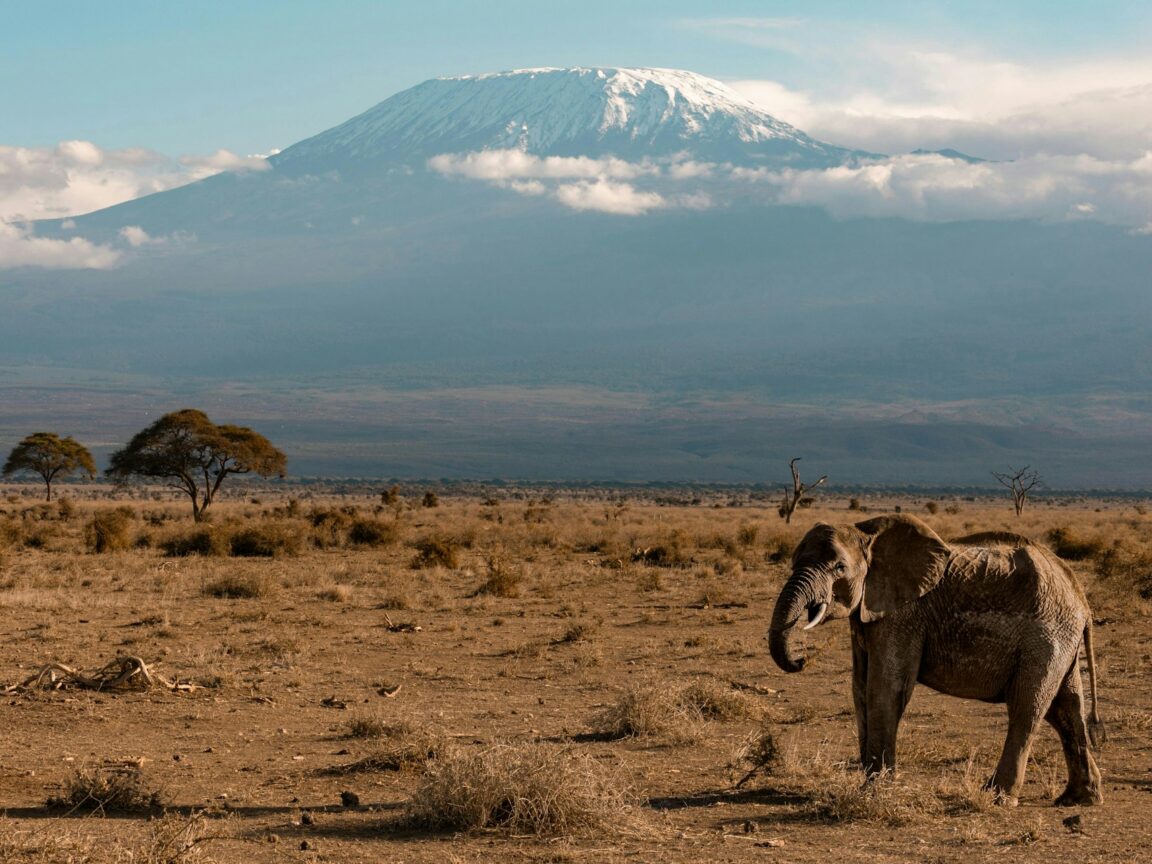
Located in southern Kenya near the Tanzanian border, Amboseli National Park is one of the country’s most iconic safari destinations, recently surpassing the Mara. Here, wide golden plains stretch beneath the towering snow-capped peak of Mount Kilimanjaro, creating a backdrop that defines classic African wilderness imagery. But Amboseli is especially famous for its large, red elephant herds with impressive ivory, offering some of the most intimate wildlife encounters in East Africa.
The park’s diverse habitats, ranging from wetlands and woodlands to open savannah, support diverse wildlife, including lions, cheetahs, giraffes, buffalo, zebra, hippos, and over 400 bird species. With its open terrain and breathtaking scenery, Amboseli delivers exceptional game viewing year-round and a safari atmosphere that feels both timeless and unforgettable.
About Amboseli National Park
Amboseli is located in southern Kenya, close to the Tanzanian border in Kajiado County. Covering 396.6 square kilometers, the park lies within the traditional lands of the Maasai and forms part of a wider cross-border ecosystem extending toward northern Tanzania. Amboseli is world-famous for its breathtaking views of Mount Kilimanjaro (Africa’s highest peak), which rises just across the border and creates one of the most iconic backdrops in African wildlife photography. Though Kilimanjaro is not inside the park, its snow-capped peak dominates the horizon, especially at sunrise and sunset.
The landscape here is mostly framed by open savannah, the seasonal Lake Amboseli, and lush wetlands fed by underground water from Kilimanjaro’s glaciers. These wetlands attract large herds of elephants and support a rich variety of wildlife, making Amboseli one of Kenya’s most rewarding and scenic safari destinations.
Top Attractions in Amboseli National Park
• Amboseli’s Red Elephants
The elephant herds of Amboseli National Park are legendary, not only for their large size and long tusks but also their striking reddish hue, which is caused by coating their bodies in the iron-rich volcanic dust of the plains. The park’s elephants are among the most intensively studied in Africa, with an estimated 1,887 known individuals in the monitored Amboseli population as of the end of 2020. Some sources estimate around 2,000 elephants in the broader Amboseli-Tanzania ecosystem. Their calm behavior around safari vehicles allows unusually close viewing – a silent, almost sacred experience beneath Mount Kilimanjaro’s gaze.
• Beyond the Elephants, Other Wildlife
While elephants define Amboseli, the park is far from a one-species stage. Because of the underground water channels from Kilimanjaro that feed the park’s marshes year-round, wildlife is plentiful and stays visible even in the dry seasons. Large grazers like zebra and wildebeest gather by the wetlands, inevitably attracting predators such as lions, cheetahs, spotted hyenas, and occasionally leopards, though leopards are more elusive here than in forested parks.
Species like the Masai giraffe, Grant’s gazelle, impala, waterbuck, and buffalo roam the park’s savannahs, while hippos wallow in the swamp-fed pools. Wildlife sightings are remarkable here; wildlife is seen in wide-open view, not hidden behind thickets, making Amboseli one of Kenya’s most reliably rewarding safari parks for game drives.
• Birdlife in Amboseli
With over 420 recorded bird species, Amboseli is a major East African birding destination. Out of these, 40 species are birds of prey, over 42 species are Somali-Maasai Biome, and over 90 species are only found in Kenya. The park’s wetlands, marshes, and seasonal lake attract ducks, geese, pelicans, herons, storks, African jacanas, Sacred Ibis, and cranes, while the open savannah offers sights of secretary birds, kori bustards, hornbills, owls, vultures, and martial eagles.
After the rains, Lake Amboseli fills and draws thousands of lesser flamingos, turning the horizon into a striking pink spectacle. Bird activity in the park often peaks between November and April, when migratory species arrive from Europe and northern Africa. Amboseli’s birdlife adds a dynamic, ever-changing layer to the safari experience, enriching both photography and game viewing.
• The Sinet Delta
The Sinet Delta is one of Amboseli’s most popular tourist attractions – a lush vegetated area located in the park’s north. Fed by underground springs from Mount Kilimanjaro’s glaciers, this reliable water source supports a dense medley of marshes, reeds, and acacia thickets, attracting grazers including large herds of elephants, zebras, wildebeest, and giraffes, particularly during the dry season.
The area is also a prime birding spot in Amboseli National Park, hosting both resident species and migratory birds drawn to its wetlands. For photographers, the Sinet Delta offers the iconic view of elephants against the backdrop of Kilimanjaro, particularly at sunrise when the mountain briefly clears, making it one of Amboseli’s most picturesque locations.
• Observation Hill
Observation Hill is one of the few elevated vantage points in Amboseli National Park that offer panoramic views across the park’s plains, swamps, and Lake Amboseli basin. From here, visitors can spot elephant families wading through marshes, zebras, giraffes, wildebeest, and impala grazing the savannah, and hippos wallowing in the wetlands. Moreover, the hill is particularly stunning at sunrise or sunset, when Kilimanjaro’s snow-capped peak glows above the horizon, creating one of the park’s most iconic safari vistas. It’s also a favorite stop for photographers and visitors seeking a full perspective of Amboseli’s diverse landscapes.
• Lake Amboseli
This shallow seasonal lake in the park’s western section dramatically changes with the seasons. During the dry months, it forms a sparkling salt pan, while after rains it fills and attracts thousands of flamingos, pelicans, and other waterbirds. The lake’s edges also draw elephants, zebras, giraffes, and other wildlife, making it a hotspot for game viewing. Lake Amboseli’s ever-changing scenery, from dry white plains to reflective waters, captures the dynamic and vibrant essence of Amboseli, offering both photographers and safari-goers unforgettable wildlife encounters.
Things to do in Amboseli National Park
Game Drives
In Amboseli, game drives begin early at around 06:30 am or late afternoon, from about 15:30, when animals are most active and conditions are ideal for sightings and photography. Thanks to the park’s wideopen savannahs and swamps, visibility is exceptional. From the comfort of your 4×4 vehicle, you may witness large herds of elephants moving across the plains, buffalo gathering on marsh edges, lions lounging in the shade, and giraffes browsing acacia trees. The added drama of the snow-capped Mount Kilimanjaro as a scenic backdrop makes each turn of the drive feel cinematic. Guided by expert rangers, you’ll explore the park’s main circuits, such as the Central Swamp Loop and Lake Amboseli circuit, teeming with wildlife.
Walking Safaris
Walking safaris in Amboseli offer a rare chance to experience the park on foot, guided by highly trained Maasai rangers who know the habits of both large mammals and smaller wildlife. The park’s open savannah and marsh edges offer safe grounds to walk near elephants, impalas, and giraffes, while learning to read animal tracks, droppings, and signs of animal presence. Lasting 3 to 4 hours, the walks are best done early in the morning when wildlife is mostly active. Expect to traverse through the park’s acacia woodlands, marsh edges, and the Sinet Delta, while enjoying close, safe encounters with mostly smaller wildlife, birds, and plant life that are often missed on vehicle drives.
Birdwatching
Amboseli is home to over 420 bird species, making it one of Kenya’s prime birding destinations. The park’s swamps, marshes, and lake edges provide food and shelter for a variety of waterbirds, including flamingos, pelicans, herons, cranes, geese, ducks, and storks, while the open plains and woodlands support species like secretary birds, kori bustards, and raptors. Birdwatching in Amboseli is best in the early morning, when birds are most active and easier to spot. Top birding spots in the park include the Sinet Delta and Lake Amboseli’s fringes, which attract a multitude of flamingos. Visitors may spot them feeding or interacting with other wildlife, giving a clear picture of how Amboseli’s bird populations fit into the broader ecosystem.
Cultural Visits to Maasai Villages
A safari in Amboseli is enriched by the chance to step into the world of the local Maasai people, whose land and wildlife traditions stretch back centuries. Cultural visits in Amboseli take visitors to explore the Maasai communities around Selenkay, Kimana, and Ol Tukai, located on the park’s outskirts and adjacent conservancies. These villages offer a hands-on look at Maasai daily life, from tending livestock on grazing lands shared with wildlife to cooking traditional meals over open fires. Visitors can also explore their manyattas (huts), learn their intricate beadwork, and enjoy the popular Maasai adumu (jumping dance).
Boat Cruises on Lake Amboseli
This is one of Amboseli’s lesscommon but highly rewarding activities. While the lake is seasonal and water levels vary, the lake provides a fresh vantage point for hippos, birds, and marsh life framed by Kilimanjaro, especially during the dry season, when it holds enough water. Afternoon is the ideal time for the best sightseeing cruises on Lake Amboseli, when wildlife congregates around the water. Because the lake sometimes dries into a salt pan, the availability of the boat cruise depends on seasonal conditions, so checking in advance is advised.
HotAir Balloon Safaris
If you’ve ever dreamed of floating above the plains at dawn, a balloon safari in Amboseli delivers wilderness magic. Flights take off around 05:30 – 6:00 am when winds are favourable and visibility is high. Floating above the open plains, you can see herds of elephants, giraffes, zebras, and buffalo moving across the savannah, while the snow-capped Mount Kilimanjaro dominates the horizon. Flights typically last 60 to 90 minutes, and most operators include a bush champagne breakfast after landing, making it a complete experience that combines adventure, wildlife viewing, photography, and relaxation.
Photography Tours
Beyond the standard activities, Amboseli offers specialist photography tours designed for those who want to capture Amboseli’s wildlife and landscapes in optimal light, usually during early morning or late afternoon. Guided visits take photographers to high-probability wildlife areas such as Observation Hill, Sinet Delta, and the park’s swamp edges, where elephants, zebras, and birds are most visible. Photography tours in Amboseli National Park are conducted by professional guides who guide framing, timing, and wildlife behavior, helping both amateur and professional photographers document the park’s red elephants, as well as other wildlife and the Kilimanjaro backdrop.
Best Time to Visit Amboseli National Park
Amboseli National Park is a year-round safari destination, but the best time to visit is during the dry seasons, from June to October and January to February. During this time, wildlife concentrates around remaining water sources, making elephant and zebra sightings more reliable, with Mount Kilimanjaro providing a clear, stunning backdrop.
In contrast, the rainy seasons, from March to May and November to December, bring a dramatic transformation featuring green plains and expansive wetlands ideal for photography, and bird activity is at its peak with the presence of migratory and resident bird species. While some roads may be muddy, the park is less crowded, offering intimate encounters with both wildlife and nature.
Getting to Amboseli National Park
Amboseli National Park is located about 230 km southeast of Nairobi, and is accessible both by road and by air.
• By Road
The most common route from Nairobi follows the Mombasa Highway (A109) to Emali and winds up south via the Loitokitok and Kimana Gate, taking roughly 4 to 5 hours. However, an alternative scenic approach comes from Nairobi via Namanga and in through Meshanani Gate, which takes about 5 to 6 hours. For those who wish to self-drive, though a 4×4 vehicle is recommended, especially during rainy periods when roads inside the park can become challenging.
• By Air
For speed and comfort, flying into the park is an excellent option. Daily scheduled flights from Nairobi’s Wilson Airport (WIL) to Amboseli’s airstrip inside the park take about 45 to 60 minutes. Charters can also land at nearby strips such as Tawi or Kitirua for guests staying in adjacent conservancies. Transfers from the airstrip to the lodges take about 30 minutes.
Kenya Safari Packages 2026/2027
Planning a Kenya safari in 2026 or 2027 offers travellers the chance to explore some of Africa’s most iconic wildlife destinations, from the world-famous Masai Mara to the scenic Amboseli plains and the beautiful Great Rift Valley lakes. Kenya safari packages range from short 3-day wildlife trips to extended luxury journeys combining multiple national parks and even relaxing beach holidays along the India
Whitan Safaris, your gateway to unforgettable wildlife and nature experiences across Uganda, Kenya, and Rwanda. We are a safari travel company dedicated to designing journeys that connect travellers with Africa’s wild landscapes, iconic wildlife, and vibrant cultures.
Safaris and Tours
Contact Us
Copyright © 2026 Whitan Safaris - Brand by Robylinks Solutions